
Most barbershops that "welcome all hair types" don't actually have a system behind that promise. They have a talented cutter or two who happen to be good with coily, curly, or textured hair, and a menu that lumps everything under "Haircut — $35." That gap between what the sign says and what the operation can consistently deliver is where re-dos, awkward pricing conversations, and one-star reviews live.
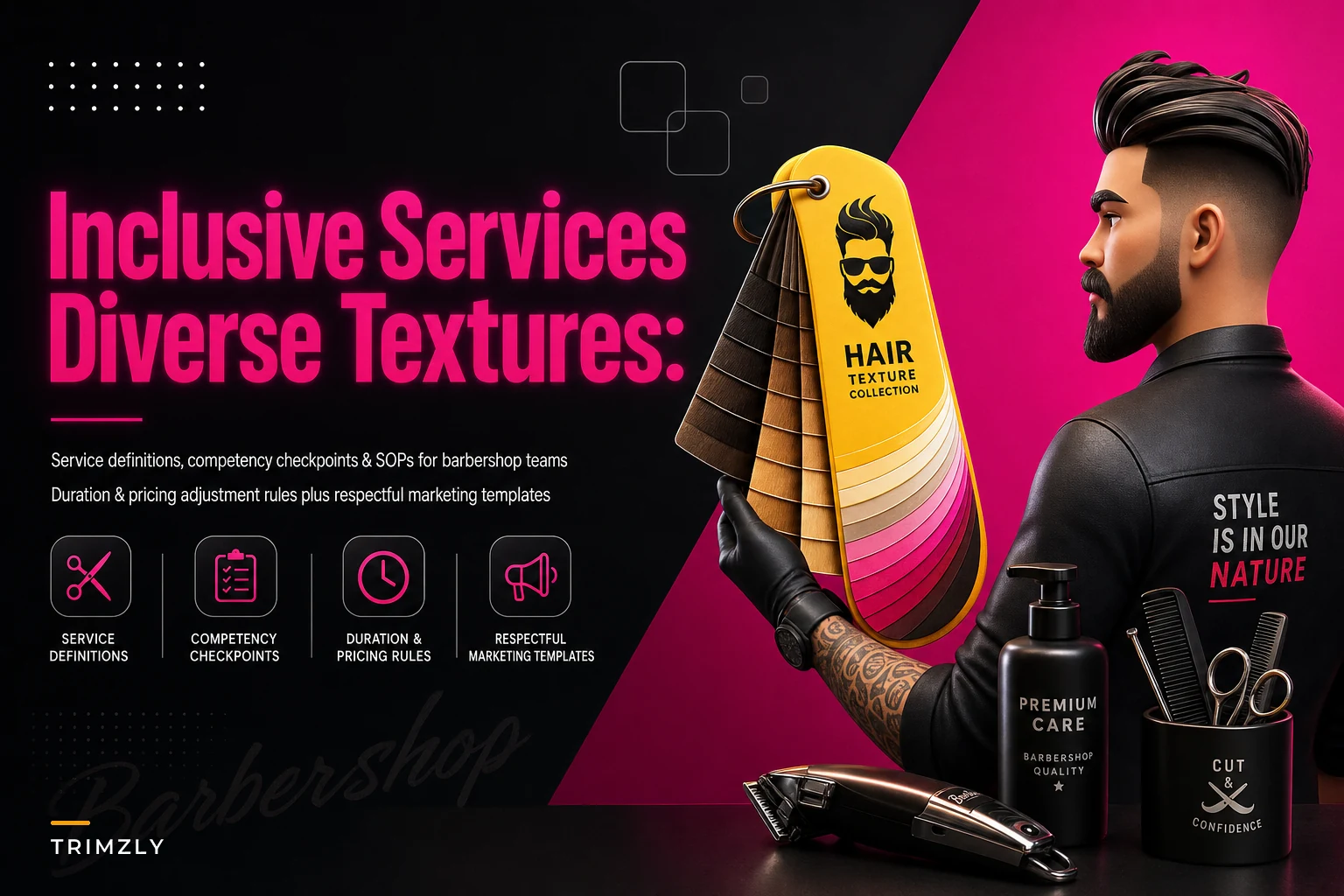
An inclusive barber services playbook isn't a diversity statement. It's an operational document: service definitions tied to hair type, competency checkpoints so you know who can actually do the work, pricing rules that reflect real chair time, and marketing copy that pulls local demand without setting expectations you can't meet.
Why "one haircut, one price" quietly loses you money and clients
A shop lists a single haircut price. A client with fine, straight hair sits down and is out in 25 minutes. A client with dense 4C hair that needs to be sectioned, picked out, shaped, and detailed takes 55 minutes for the same price. The barber isn't slow — that hair genuinely takes longer to cut well.
Two things break at once. First, the longer service subsidizes the shorter one, so your effective hourly rate collapses on exactly the clients who value skilled work the most. Second — and this is the one owners miss — the barber starts subtly avoiding those bookings. Nobody says it out loud. But when a stylist can do two quick fades in the time one textured cut takes, and both pay the same, the incentive is obvious. Over a few months the shop's reputation with textured-hair clients quietly erodes, not because of hostility, but because of math.
The other failure mode is the opposite: a shop marks up "ethnic hair" or "curly hair" as a separate, pricier category with no clear reason attached. Clients notice. It reads as a surcharge for existing, and it spreads on local Facebook groups fast. The fix isn't higher prices or flat prices. It's prices tied to time and technique, described neutrally, applied to everyone.
Define services by what the hair actually needs, not by category labels
Stop naming services after hair "types" as identity categories and start naming them after the work involved. Density, curl pattern, length, and finish drive chair time far more than any label.
Never miss a booking amidst the hustle.
Trimzly helps you schedule, confirm, and manage every client visit seamlessly.
- Unified appointment management
- Automated client reminders
- Optimized staff scheduling
No credit card required
A practical structure: a base cut service, plus modifiers that adjust time and price based on real factors. The modifiers apply to anyone whose hair triggers them.
| Service / Modifier | What triggers it | Added time | Pricing logic |
|---|---|---|---|
| Base cut | Standard clipper/scissor work | Baseline (30 min) | Anchor price |
| Density surcharge | Thick, dense hair requiring extra sectioning | +10–15 min | +$8–$12 |
| Texture detailing | Coily/curly work needing shaping, picking, sponge/twist finish | +15–20 min | +$12–$18 |
| Length adjustment | Longer hair (over ~4 inches) | +10 min | +$8–$10 |
| Custom finish | Twist-out prep, curl definition, specialty styling | +15 min | +$15–$20 |
These exact numbers aren't the point — you'll calibrate them to your market and your average ticket. The point is that a client with dense, coily hair and a client with thick straight hair might both trigger the density modifier. The system describes hair, not people. That neutrality is what makes it defensible when someone asks "why does mine cost more?" The honest answer becomes "it takes longer, and here's roughly how much longer."
One shop that reworked its menu this way found that its "expensive" textured cuts were actually the most profitable per chair-hour once priced correctly — they'd been running at a loss during peak hours before that.
Competency checkpoints: knowing who can actually do the work
Listing a service doesn't mean your team can perform it consistently. A barber trained mostly on fades and taper work may be genuinely skilled and still produce uneven results on tightly coiled hair or a wash-and-go on loose curls. That's a training gap, not a character flaw — but if you book those services blindly across the whole team, you're gambling with re-dos.
-
Level 1 — Not yet Cannot take these bookings solo. Observes or assists only.
-
Level 2 — Supervised Can perform with a senior barber available to check the result before the client leaves.
-
Level 3 — Independent Books these services solo, quality is reliable.
Then wire the booking system so specialty services only route to Level 2 (with oversight) and Level 3 barbers. This single rule prevents the most common inclusive-menu disaster: advertising a service, getting the booking, and assigning it to someone who's never confidently done it.
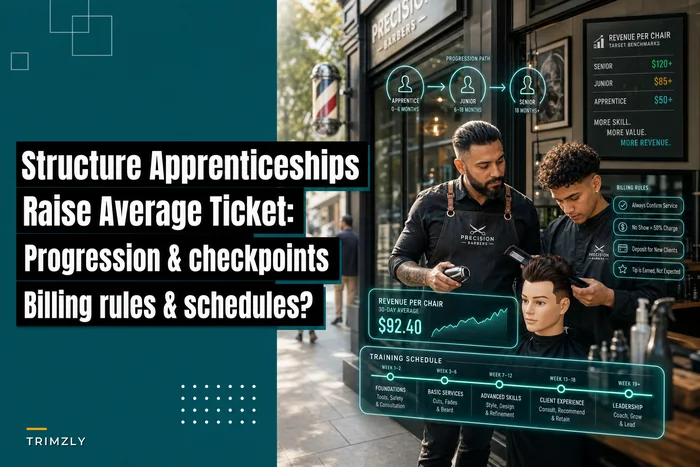
Competency isn't static. Tie progression to real checkpoints — a set number of supervised cuts, a photo-reviewed portfolio, sign-off from a senior barber. If you already run structured skill development, this slots right into the same framework we laid out for structuring apprenticeships that raise average ticket, just applied to texture-specific competencies instead of general progression.
When this level of structure is overkill
If you're a solo barber or a two-chair shop where both cutters are already strong across all hair types, you don't need a formal matrix — you need honest pricing and a solid consultation. The competency system earns its keep once you have four or more barbers with uneven skill sets, or when you're onboarding new hires who look great on fades but haven't been tested on texture.
The consultation is where inclusive service actually happens
You can have perfect pricing and a fully trained team and still generate re-dos if the consultation is weak. Textured and curly hair carries more variables the barber needs to confirm before the first cut: how the hair behaves dry versus damp, how much shrinkage to account for, whether the client wants their natural pattern preserved or a more structured shape, what products they actually use at home.
Shrinkage is the classic trap. A client asks to "take a little off," the barber cuts to what looks like a small amount on wet or stretched hair, and it springs up two inches shorter once it dries. The client is upset, the barber is confused, and you've got a re-do you can't reverse. A consultation SOP that specifically asks about shrinkage and confirms length on dry hair prevents almost all of these.
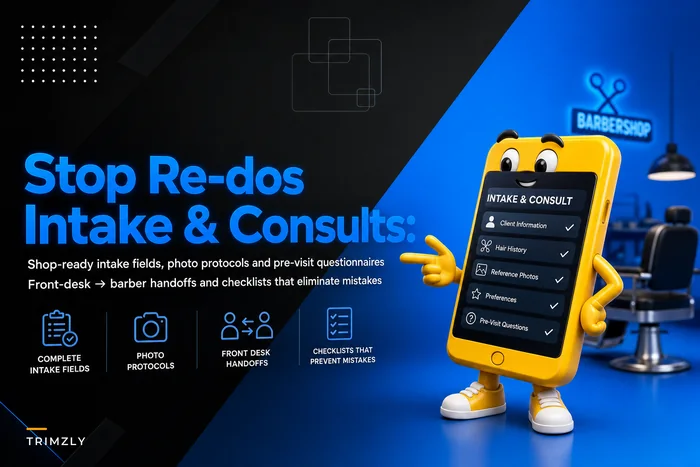
A tight intake process catches these before scissors touch anything. If you haven't built one, the workflow logic in intake and consultation workflows that eliminate re-dos applies directly here — you're just adding texture-specific questions to the standard flow.
Your specialty-service consultation should confirm, at minimum:
-
Curl pattern and density (to trigger the right pricing modifier honestly and upfront)
-
Desired finish — natural pattern, defined curls, structured shape, or specific style
-
Shrinkage expectations, confirmed on dry hair before cutting
-
Home routine and products (affects what result is realistic and maintainable)
-
Any prior bad experiences (tells you what to over-communicate)
Confirming the price modifier during consultation — not at checkout — is the single biggest thing that kills the "surprise surcharge" complaint.
When the client hears "your hair triggers the texture-detailing add-on, so this'll run about $52 and take around 50 minutes" before the cut starts, there's no ambush. Almost nobody objects to a clear number given upfront. Nearly everyone objects to it appearing on the receipt.
Duration and pricing adjustment rules that keep the schedule honest
Pricing modifiers only work if your scheduling reflects them too. A lot of shops build the price tiers but keep booking every haircut in a 30-minute slot. Then the textured cut that genuinely needs 50 minutes blows up the schedule, the next three clients wait, and the barber rushes the end of the cut to catch up — producing exactly the uneven result the whole system was supposed to prevent.
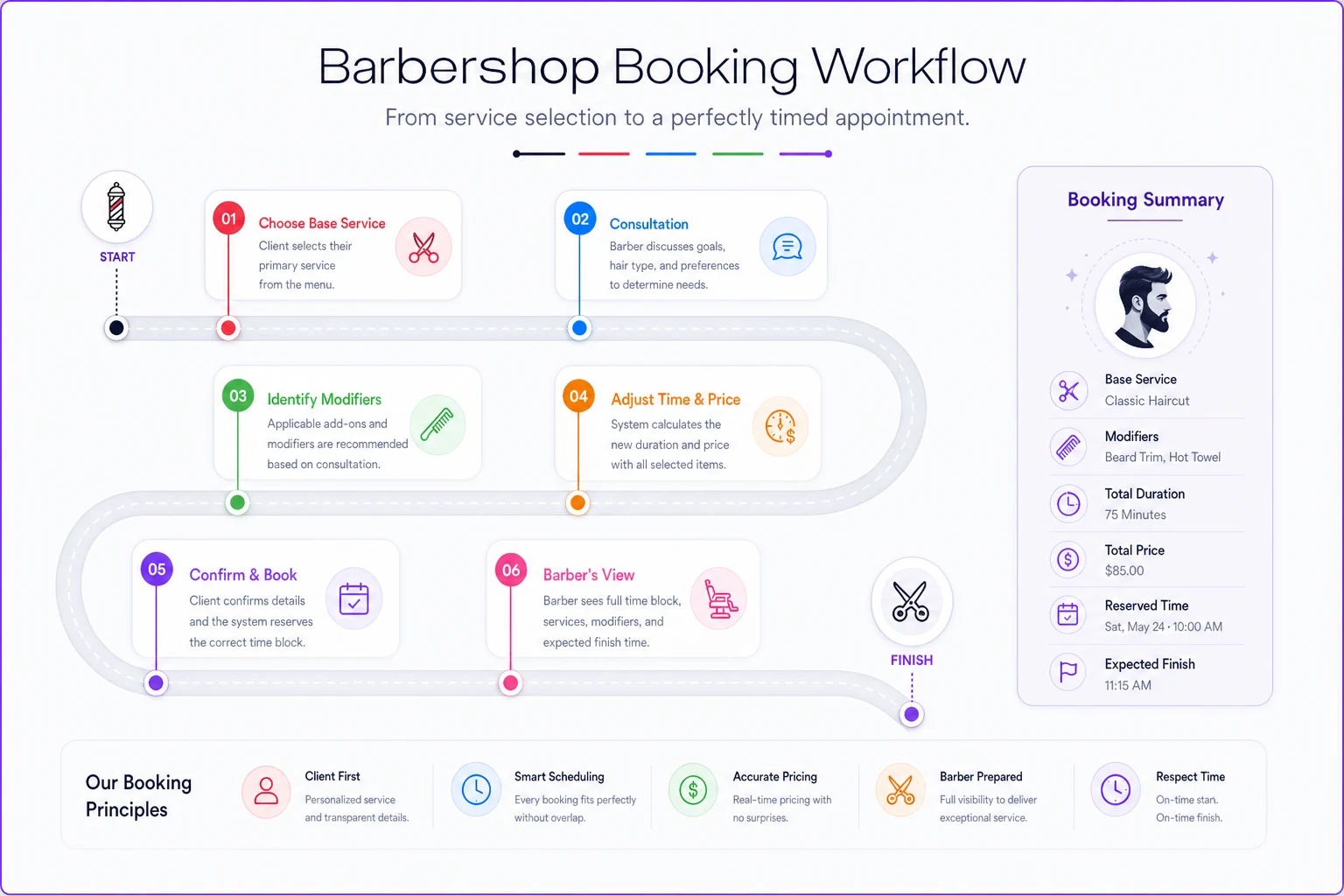
The rule is straightforward: if a service triggers a time modifier, it triggers a schedule block that matches. Your booking should reserve the real chair time, not the optimistic time.
-
Client selects a base service when booking online or at intake.
-
The consultation (or a booking questionnaire) identifies which modifiers apply.
-
The system adjusts both the quoted price and the reserved time slot before confirming.
-
The barber sees the full time block and expected finish, so they pace correctly.
-
At checkout, the price already matches what was quoted — no renegotiation.
Here's a simple workflow for how booking, consultation, modifiers, and scheduling interact.
Modern scheduling platforms let you attach variable durations and prices to service modifiers automatically, so a textured cut books a 50-minute block instead of jamming into 30. That's the operationally useful role of software here — not doing anything magical, just making sure the schedule reflects reality so nobody rushes a cut to stay on time. If your system can't handle variable durations by service, that's worth fixing before you launch inclusive pricing, because flat time blocks will quietly undermine the whole effort.
Marketing copy that captures local demand without overpromising
Once the menu, competency, and scheduling are solid, you can market honestly — and honest marketing outperforms vague marketing in this space because the audience has been burned before. People with textured hair often drive past several shops to reach one they trust. Specificity is what earns that trust.
Two extremes to avoid. Don't write generic "all hair types welcome!" copy that says nothing — it reads as boilerplate and nobody believes it. And don't overpromise services your team can't reliably deliver, because a great ad plus a bad cut equals a public review that costs you more than the ad ever earned.
> "Skilled in cutting and shaping all textures — from tapers and fades to coily, curly, and dense hair. Every specialty cut starts with a consultation so we get length, shrinkage, and finish right the first time."
> "Texture-detailing cut — shaping, defining, and finishing for curly and coily hair. Priced by time and detail involved (about 45–55 min). We'll confirm your exact price during consultation so there are no surprises."
> "Marcus specializes in curly and coily textures — natural shapes, sponge twists, and defined finishes. Book him directly for specialty work."
That last template only goes live if Marcus is actually Level 3. Marketing a named specialist you don't have, or one who isn't reliable yet, is how you generate the exact reviews you're trying to earn your way past.
A short real scenario
A four-chair shop in a mixed neighborhood had a flat $32 haircut price and two barbers who were quietly good with textured hair but avoided those bookings because they paid the same as a fast fade. Textured-hair clients were booking maybe once, leaving neutral-to-annoyed reviews about long waits and rushed cuts, and mostly not coming back.
They rebuilt the menu with density and texture-detailing modifiers, ran a quick competency check that put two barbers at Level 3 and one at Level 2 with supervision, and switched specialty services to 50-minute blocks. Prices got confirmed during consultation instead of at checkout. Nothing exotic.
Over the following few months, textured cuts went from their least profitable service per chair-hour to among the most profitable, because they were finally priced for the time they actually took. Re-dos on curly and coily work dropped noticeably once consultations caught shrinkage upfront. And the reviews shifted — clients specifically mentioned feeling like the shop "knew what to do with their hair," which is exactly the local reputation that pulls people past three other barbershops to get to yours.
Who should not roll this out yet
If your team genuinely can't cut textured hair well, don't paper over it with pricing tiers and marketing copy — you'll just charge more for results that generate complaints. Fix the skill first: bring in training, hire for it, or pair someone strong with someone learning. The playbook amplifies capability; it doesn't create it.
And if your booking system can't handle variable durations, hold off on the marketing push until it can. Advertising specialty cuts you then cram into 30-minute slots is a setup for rushed work and bad reviews.
Pulling it together
An inclusive services menu that actually works rests on four things fitting together: services defined by the work the hair needs, competency checkpoints so bookings only route to people who can deliver, pricing and duration rules that reflect real chair time, and marketing that promises only what you can consistently do. Miss any one and the others start leaking — great cuts blow up the schedule, honest pricing gets undercut by weak consultations, good marketing draws clients to a re-do.
Get all four aligned and something quieter happens. Barbers stop avoiding the bookings. Clients stop bracing for a bad experience. And the shop builds a reputation that's genuinely hard for competitors to copy, because it's built on operational follow-through, not a sign in the window.
Get all four aligned and something quieter happens. Barbers stop avoiding the bookings. Clients stop bracing for a bad experience. And the shop builds a reputation that's genuinely hard for competitors to copy, because it's built on operational follow-through, not a sign in the window.
Ready to elevate your barbershop operations?
Join 500+ barbershops using Trimzly to save time, reduce scheduling conflicts, and enhance client satisfaction.