
Your Saturday afternoon looks great. Every chair filled, walk-ins waiting, the shop buzzing. But zoom out to the full week and you see the actual picture: Monday through Wednesday drag, new clients disappear after one cut, and the same core regulars keep you afloat while everyone else churns through.
The frustrating part is you're actually good at getting people in the door. Between walk-ins, Instagram, and word-of-mouth, new faces show up regularly. But converting those first-timers into regulars who book standing appointments and bring their kids? That's where most shops fall apart.
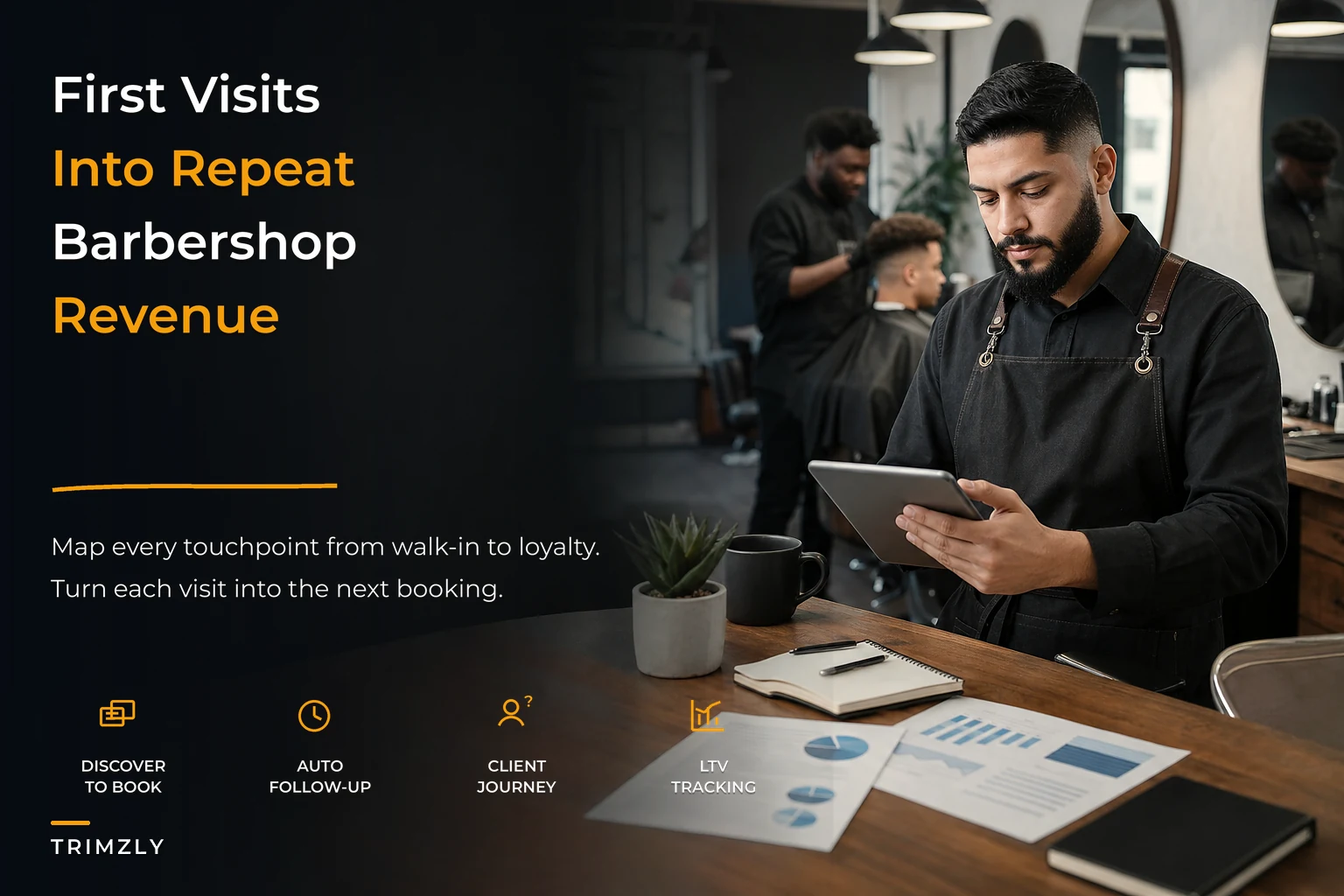
A proper client lifecycle system changes this. Instead of hoping clients come back, you build touchpoints that guide them from discovery through rebooking into long-term retention. Each phase has specific actions, measurable outcomes, and automation opportunities that cut the manual work while actually improving results.
Breaking down the five phases that determine client value
Most barbershops run on gut feel when it comes to client relationships. They know some clients are valuable and others aren't, but there's no real system for moving people from one category to another. A lifecycle approach gives you that system.
The five phases:
-
Discover → How potential clients first hear about you
-
Book → Their first appointment experience
-
Experience → What happens during and immediately after the cut
-
Rebook → Getting them back for visit two and three
-
Retain → Building long-term loyalty and referrals
Each phase has metrics that tell you whether it's working. Discovery tracks new client sources and conversion rates. Booking measures friction points and drop-offs. Experience monitors satisfaction. Rebooking watches return rates within 30, 60, and 90 days. Retention looks at lifetime value, visit frequency, and referrals.
The mistake shops make is treating these as separate activities instead of a connected flow. When your discovery efforts don't align with your booking process, or your experience doesn't set up the rebook, you lose clients at every transition point. The value comes from connecting these phases into one continuous system.
This diagram shows the flow between phases and where automation and measurement should sit.
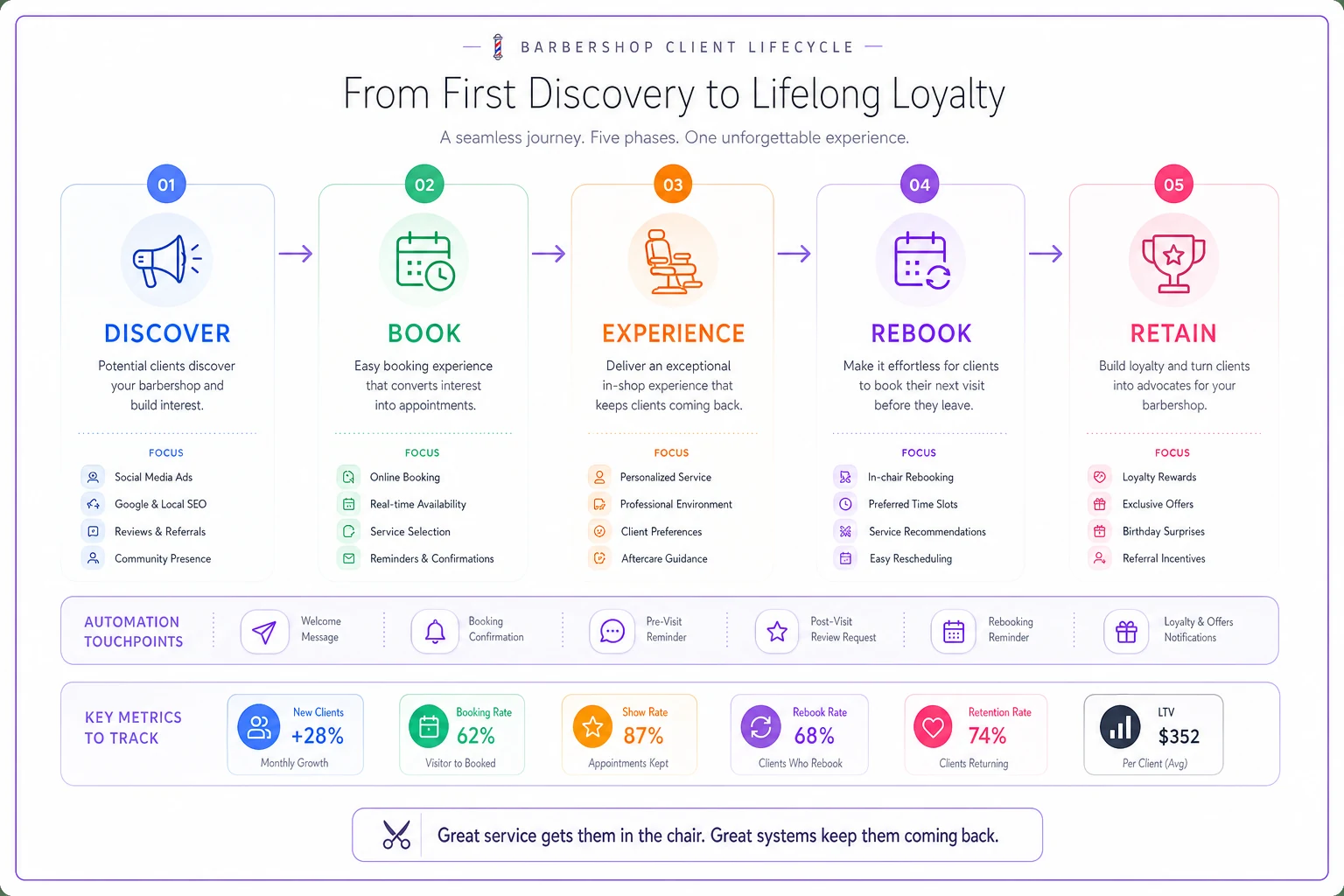
Use this as a reference for where to prioritize fixes and automation.
Discovery: Where most shops waste their marketing budget
Walk into any barbershop and ask where new clients come from. You'll get vague answers about word of mouth and the neighborhood. Meanwhile, they're spending money on Instagram ads, Google listings, maybe even print flyers, without knowing what actually drives bookings.
Never miss a booking amidst the hustle.
Trimzly helps you schedule, confirm, and manage every client visit seamlessly.
- Unified appointment management
- Automated client reminders
- Optimized staff scheduling
No credit card required
Discovery isn't just about being visible — it's about being findable by the right people at the right moment. A guy googling "barbershop near me" at 2 PM Tuesday has different intent than someone browsing Instagram stories on Sunday night. Your strategy needs to account for that.
Start with tracking. Every new client should get a simple intake question: "How'd you hear about us?" But instead of generic options like "online" or "friend," get specific:
-
Google search (maps vs regular search)
-
Instagram (profile vs specific post vs ad)
-
Walk-by (first time noticing vs been meaning to try)
-
Referral (which barber's client referred them)
-
Review sites (Yelp, Google reviews, etc.)
This data tells you where to focus. If Google Maps drives 40% of new clients but you haven't updated your photos in two years, that's an easy fix. If Instagram brings people in who are asking for services you don't offer, you need to adjust your content.
Automation helps here by connecting discovery to booking. When someone finds you on Google and clicks "Book Now," the source data should follow them through your system. This tracking can happen automatically through proper booking software setup — no manual logging, just accurate attribution.
Booking: The conversion killer hiding in your intake process
What typically happens when someone decides to book their first appointment: they call during business hours, get voicemail because everyone's cutting, check Instagram for booking info, find a phone number, finally get through, and play phone tag trying to find a time that works.
By the time they actually book — if they book — you've created three or four friction points that didn't need to exist. Each one costs you a chunk of potential bookings. Multiply that across hundreds of monthly inquiries and you're looking at real revenue loss.
The modern booking flow eliminates this through smart automation. Online booking with real-time availability is table stakes now. The real optimization is in the booking experience itself.
Your booking system should:
-
Show accurate availability across all barbers
-
Display clear service descriptions and pricing
-
Capture client preferences during the booking process
-
Send immediate confirmation with all details
The preference capture is more important than shops realize. During that first booking, you can collect:
-
Preferred cut length
-
Beard service needs
-
Sensitivities or concerns
-
How they typically describe their haircut
-
Scheduling preferences (morning vs evening, specific days)
Make scheduling preferences selectable during booking to avoid manual follow-ups and ensure proper segmentation.
This lives in their profile permanently, making every future interaction smoother. When they walk in, their barber already knows they prefer a 2 on the sides, have a sensitive scalp, and usually book Tuesday evenings. That kind of preparation changes the experience before the client even sits down.
Experience: Why perfect cuts don't guarantee return visits
You can give someone the best haircut of their life and still never see them again. Technical quality matters, but the overall experience determines whether they come back. This includes everything from walking in to the follow-up three days later.
The in-shop experience starts before the cut even begins. New clients feel uncertain in a new environment. They don't know if they should wait by the door or grab a seat. They're not sure if you take cards. They're wondering if they picked the right service.
Smart shops eliminate this through a quick welcome when a new client walks in:
-
Confirm their appointment and service
-
Offer a beverage if available
-
Explain any wait time
-
Introduce them to their barber
-
Clarify payment and tipping
During the cut, the conversation matters as much as the technique. First-time clients are evaluating fit — not just the haircut, but whether this is somewhere they'd come back regularly.
Before they leave, you should:
-
Take a photo for their profile (with permission)
-
Confirm they're happy with everything
-
Explain your rebooking process
-
Make sure they have your contact info saved
Then comes the follow-up, which most shops completely skip. A text 2-3 days later asking how the cut is wearing costs almost nothing and signals that you care beyond the transaction. It also opens the door for rebooking.
Rebook: The 30-day window that determines long-term value
If someone doesn't book their second appointment within 30 days of their first, they probably won't. Clients who return within 4-6 weeks have roughly a 70% chance of becoming regulars. Those who wait 8+ weeks drop closer to 20%.
Most shops do nothing during this window. They cut hair, say "see you in a few weeks," and hope for the best. No wonder retention for new customers tends to hover around 30-40%.
The rebook phase needs structure to work. It starts during the first visit — instead of vague suggestions about coming back "in a month or so," give specific guidance based on their cut and hair type. "With your hair type and this cut, you'll want to come back in about 4 weeks to keep the shape."
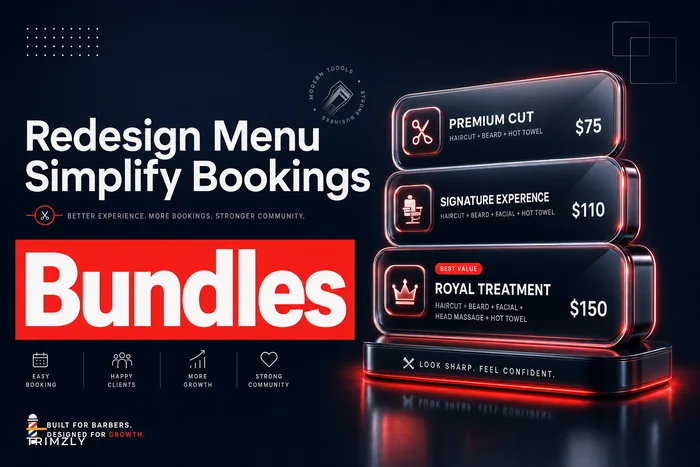
Your service menu design also affects rebooking rates. When clients clearly understand what service they need and why, they're more likely to return. Confusion about services creates hesitation.
An automated rebook sequence might look like:
-
Day 3
Follow-up text checking on the cut
-
Day 21
Reminder about the optimal rebooking window
-
Day 28
Availability alert for their preferred times
-
Day 35
Last-chance reminder if they haven't booked
-
Day 45
Re-engagement attempt with a small incentive
Each message should feel personal, not pushy. Something like: "Hey Marcus, it's been about 4 weeks since your cut. Tuesday evenings still work best for you? Got openings this week if you want to keep that fade."
Segmentation matters here. New clients need different messaging than regulars. Someone who got a skin fade needs different timing than someone with a longer cut. Good automation platforms handle this segmentation based on service history and preferences automatically.
Retain: Building the regular base that stabilizes revenue
Retention is where the real money is. A client who comes every 3 weeks for 2 years can generate $3,000-4,000 in revenue. A base of 100 regulars like that is a stable foundation before you count walk-ins, products, or add-on services.
But retention doesn't happen automatically after a few good cuts. It requires consistent relationship building. Regulars stay for three reasons: consistency, convenience, and connection.
Consistency means reliable results every time:
-
Detailed client notes any barber can access
-
Photo history of previous cuts
-
Standardized service delivery
-
Quality control processes
Convenience means low friction in their regular routine:
-
Standing appointment options
-
Quick rebooking
-
Flexible rescheduling
-
Multiple payment methods
-
Easy communication channels
Connection goes beyond good conversation during cuts:
-
Remembering personal details
-
Celebrating milestones
-
Exclusive perks for regulars
-
Community events
-
Referral recognition
The operational challenge is maintaining all of this as you scale. At 20 clients a week, remembering everyone is easy. At 200 clients weekly across multiple barbers, you need systems.
This is where AI-powered operational software earns its keep. It maintains detailed profiles, triggers personalized communications, tracks preferences, and makes sure nothing falls through the cracks. The barber still builds the relationship — the system just makes sure they have the right information when they need it.
Measuring success: KPIs that connect to lifetime value
Most shops track daily revenue and chair utilization but miss the lifecycle indicators that actually predict long-term success.
The lifecycle KPIs that matter:
Discovery Phase:
-
New client acquisition cost by channel
-
Booking conversion rate by source
-
Time from discovery to booking
Booking Phase:
-
Online booking adoption rate
-
Booking completion rate
-
No-show rate for new clients
Experience Phase:
-
First-visit satisfaction scores
-
Same-day rebook rate
-
Follow-up response rate
Rebook Phase:
-
30-day return rate
-
60-day return rate
-
Average weeks between visits
Retention Phase:
-
6-month retention rate
-
Annual client value
-
Referral generation rate
These connect directly to lifetime value. A 10% improvement in 30-day return rate can add $50-75k in annual revenue depending on your volume. A meaningful reduction in no-shows could mean another $20-30k. Small improvements compound fast.
The challenge is capturing this data without creating administrative burden. Manual tracking in spreadsheets breaks down within weeks. You need systems that log data automatically through normal operations.
Implementation roadmap: 90 days to a working lifecycle system
You don't need to build everything at once. A phased approach lets you see results while working toward the full system.
Days 1-30: Foundation and tracking
-
Implement source tracking for new clients
-
Set up basic online booking
-
Create simple preference capture during intake
-
Start photographing cuts (with permission)
-
Write your follow-up message templates
Days 31-60: Automation and optimization
-
Launch automated reminder sequences
-
Test rebook messaging cadences
-
Segment your client base
-
Create retention perks for regulars
-
Refine your service menu for clarity
Days 61-90: Scale and refinement
-
Add multi-channel discovery tracking
-
Implement satisfaction monitoring
-
Build referral recognition
-
Create regular client programs
-
Set up KPI dashboards
The table below summarizes the 90-day roadmap and the core actions for each timeframe.
| Timeframe | Actions |
|---|---|
| Days 1-30 | Implement source tracking for new clients; Set up basic online booking; Create simple preference capture during intake; Start photographing cuts (with permission); Write your follow-up message templates |
| Days 31-60 | Launch automated reminder sequences; Test rebook messaging cadences; Segment your client base; Create retention perks for regulars; Refine your service menu for clarity |
| Days 61-90 | Add multi-channel discovery tracking; Implement satisfaction monitoring; Build referral recognition; Create regular client programs; Set up KPI dashboards |
Each phase builds on the previous one while generating value along the way. You're not waiting 90 days to see results — you're seeing incremental improvement from week one.
Common lifecycle mistakes that kill client relationships
Even shops with good intentions make the same predictable mistakes.
Over-automating too quickly. Getting excited about automation and launching a dozen message sequences at once is a common error. Clients feel spammed, engagement drops, and the whole system gets abandoned. Start with one or two critical touchpoints and expand from there.
Ignoring barber buy-in. Your barbers are the ones building the relationships. If they don't understand or support the lifecycle system, it won't work. Include them in planning, show them how it makes their jobs easier, and let them have input on messaging.
Focusing on acquisition over retention. It's tempting to keep chasing new clients, but retention drives profitability. A 5% improvement in retention typically does more for your bottom line than a 20% increase in new client acquisition.
Treating all clients the same. Not every client wants weekly texts or standing appointments. Some prefer minimal contact and flexibility. Your system needs to accommodate that while still maintaining meaningful touchpoints.
Neglecting the transition points. Most client loss happens between lifecycle phases — the gap between first visit and rebooking, the space between occasional visitor and loyal regular. These transitions need intentional attention.
Making it feel transactional. When every interaction feels like a sales pitch, clients disengage. Balance promotional messages with genuinely useful content and real human contact.
Technology's role: Where automation helps and where it doesn't
The barbershop industry has a complicated relationship with technology. For every shop using digital tools well, there are several still running on paper and memory. The key is knowing where technology actually helps versus where it gets in the way.
Automation is genuinely useful for repetitive, data-heavy tasks — sending appointment reminders, tracking preferences, calculating optimal rebook timing, segmenting client lists. The system never forgets, never gets slammed during a busy Saturday, never drops a follow-up.
But automation fails when it tries to replace human judgment. A bot can't read the room when a client is having a rough day. It can't adjust communication style based on personality. It can't decide whether to squeeze in a regular who's running 10 minutes late.
The sweet spot is AI-assisted operations where technology handles the infrastructure and humans handle the relationships. Your booking system captures preferences automatically, but your barber decides how to use that information. Your messaging platform sends rebook reminders, but they're written in your voice with your shop's personality.
Operational platforms built specifically for barbershops understand this balance. They provide structure and automation while preserving the personal touch that makes barbershops what they are. Think of it as a very organized assistant who handles all the administrative work so you can focus on cutting hair and building relationships.
The long game: Why lifecycle thinking changes how you operate
Most barbershops run in reactive mode — respond to whoever walks in, handle issues as they come up, hope for the best. A lifecycle system shifts you into proactive mode. You're anticipating needs, preventing problems, and actively guiding client relationships.
This changes how you think about staffing, marketing spend, and training. Staffing decisions start factoring in lifecycle phases. Marketing targets specific stages rather than generic awareness. Training emphasizes long-term relationship building over single-transaction satisfaction.
The financial impact compounds. Year one might show modest improvements as you dial in the system. By year two, higher retention rates start to transform your unit economics. Year three and beyond, you're running a fundamentally different kind of business — more predictable, more scalable, more relationship-driven.
The barbershops doing well right now aren't necessarily the ones with the best technical skills or the flashiest shop. They're the ones who figured out how to systematically turn first-time visitors into regulars. They treat client relationships as an operational process that can be measured, optimized, and scaled.
Building a client lifecycle system isn't about following a rigid template. It's about understanding the journey your clients take and deliberately designing touchpoints that move them toward long-term loyalty. Start simple, add automation where it helps, and refine based on what the data tells you.
The shops still struggling five years from now will be the ones hoping clients come back. The successful ones will have systems making sure they do.
Ready to elevate your barbershop operations?
Join 500+ barbershops using Trimzly to save time, reduce scheduling conflicts, and enhance client satisfaction.